
Few names in the culinary world carry the weight of Alain Ducasse. The Monégasque maestro—holder of no less than 21 Michelin stars over the course of his career—built an international restaurant empire on the conviction that French cooking never goes out of style. Benoit New York, Ducasse’s West 55th Street outpost, transplants the soul of his beloved Parisian bistro to Midtown, where it has earned a mentioned in the Michelin Guide. Penny tile floors, brass accents, red velvet booths, crisp, white tablecloths, and warm pendant lighting lean into classical appeal.
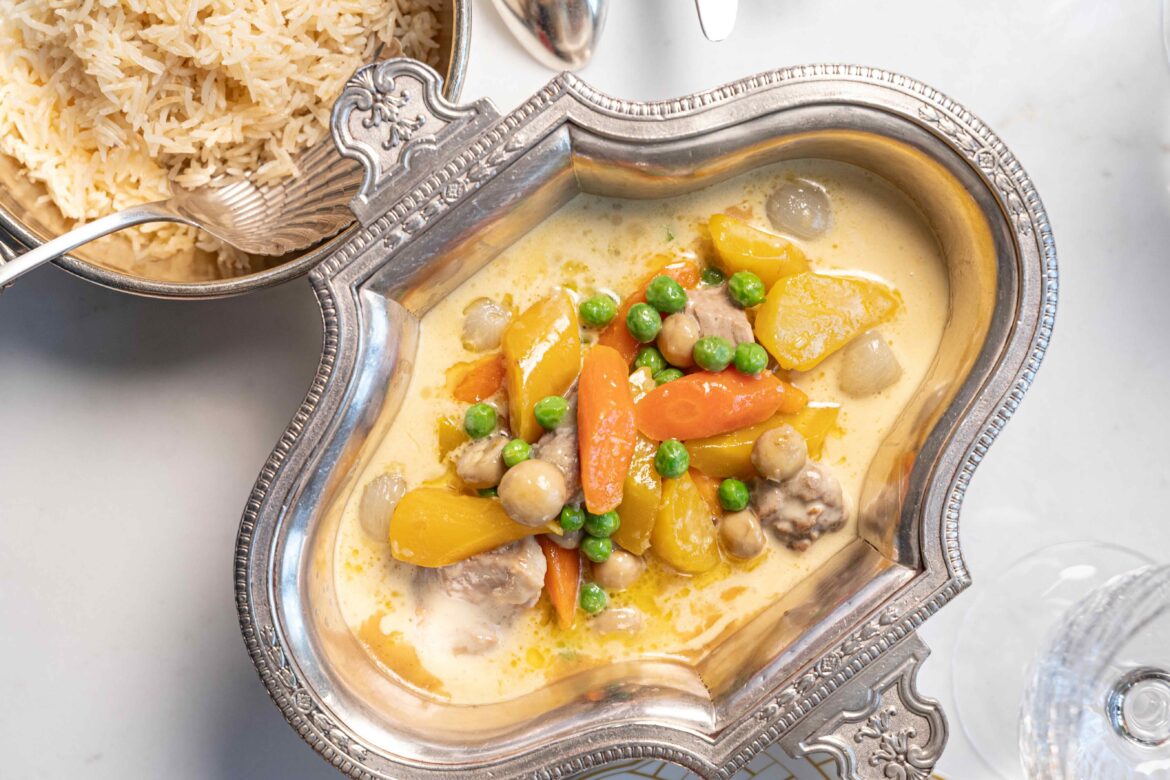
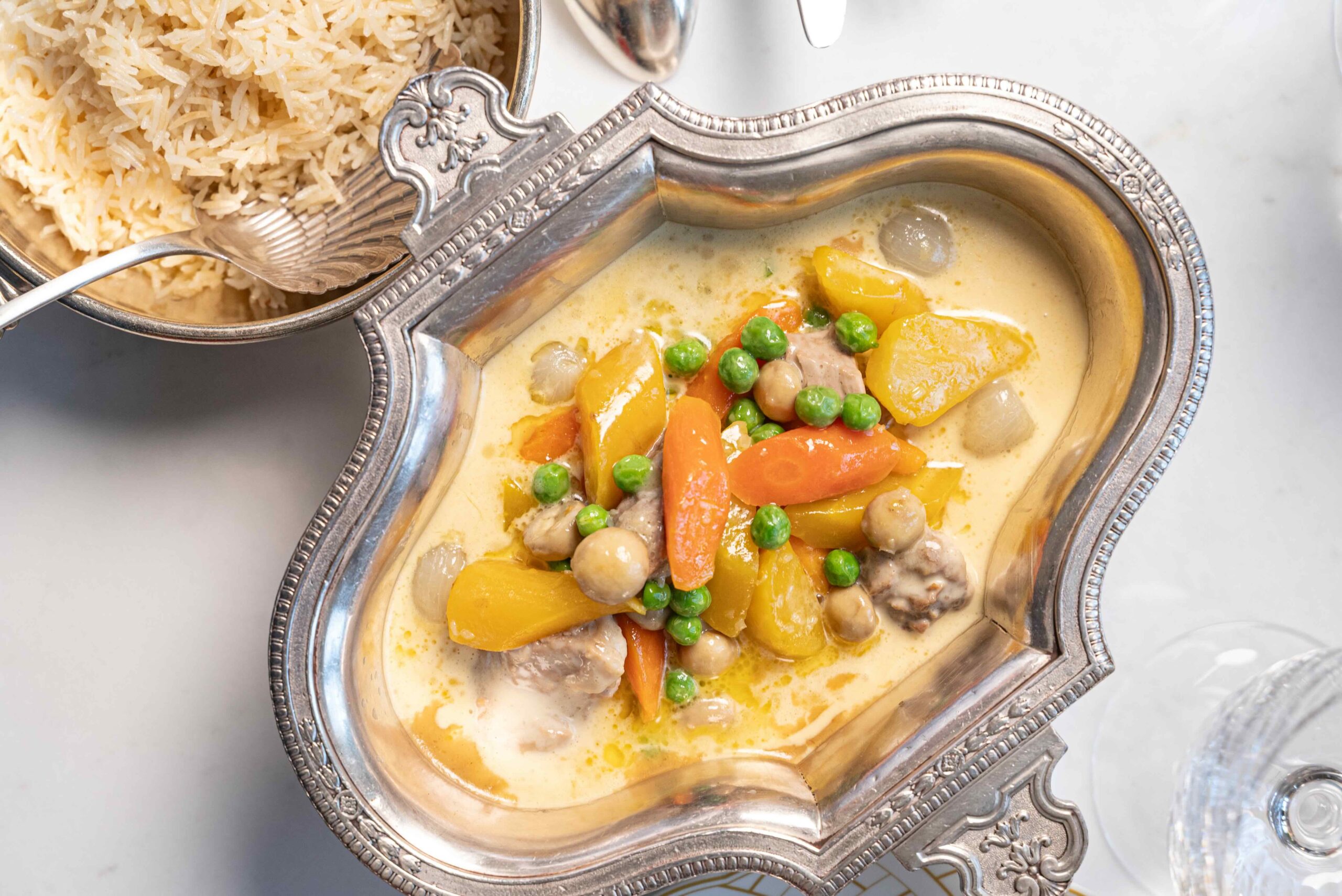
In mid-April, Lucile Plaza officially took the helm of the Benoit kitchen as executive chef in a celebration Ducasse himself attended. Her résumé reads like a course in the French canon—Carré des Feuillants, Taillevent, Le Coq Rico. And yet, even in 2026, her ascension is unlikely given that only 6% of Michelin restaurants worldwide are led by women (approximately 1 in 17). On the occasion of this achievement Plaza shares her Blanquette de Veau recipe from Benoit, a festive veal stew that is rich with flavor.
As the warmer days of spring seem to be taking their sweet time, this rich, saucy, ever-warming classic makes an ideal entree (though it would be just as delicious and popular a the outset of fall or in the dead of winter).
Ingredients
Method
- Cut the veal shoulder in 2-inch large cubes. Place them in a large pot and cover with cold water, bringing to a simmer.
- As the veal begins to cook, wash, peel and clean the vegetables, cut the carrots, tie the celery, leek, bay leaves and thyme together with butcher twine – quarter the white mushrooms.
- Once the water is simmering, use a fine mesh skimmer to remove all the foam that has risen to the surface. Repeat for 10–15 minutes until the liquid remains clear. Some will say to throw away this water, but I don’t. It’s a concentration of flavor and one of my secrets!
- When the broth is clear, add black pepper, the vegetables and bouquet garni. Lower the heat to a very gentle simmer and cook for 90min to 2hrs (until the meat is tender enough to be cut with a spoon or shredded through your fingers). The meat should always be covered with liquid.
- After an hour, add the mushrooms. I do not recommend adding salt just yet.
- While it’s cooking, peel and cook the pearl onions with butter, water, salt and 3 pinches of sugar.
- Now let’s prepare the roux! In a pot, melt the butter and slowly add the flour, stirring it for 12-15 min.
- To know if your roux is ready: if using all-purpose flour, the roux will start off very liquid and thicken as it cooks. If using rice flour, it will start off very thick and liquify as it cooks. At this stage, remove the roux off the heat and keep it on the side.
- When the veal is cooked, strain the stock, but put it back in the original pot and set the meat and carrots aside (discard the onion, leek, and bouquet garni).
- Place stock back on heat and reduce the broth to 1/3, it should be nappant and corsé, bringing out the natural salt.
- To know if a sauce is nappant: use a spoon, dip it in the sauce and run your finger on the back of it, if the line stays clean it’s ready.
- Add the 16oz of heavy cream, cook for 5 min and then with a whisk, incorporate the roux little by little while bringing it to boil and checking the texture. It should coat the back of a spoon.
- Usually, you’d pour the stock over the roux, but if the mix is too thick you can’t do anything. I’d rather add the roux into the stock.
- When the texture is as desired, remove from the heat and add 4 oz of crème fraiche, which will smoothen the texture and bring a touch of acidity. You can substitute the crème fraiche for sour cream.
- Put the meat, mushrooms, carrot and pearl onions back in the pot and adjust the seasoning: salt, black pepper and the juice of ½ a lemon into the sauce to cut richness and bring the freshness.
- Serve it with a rice pilaf and enjoy.