

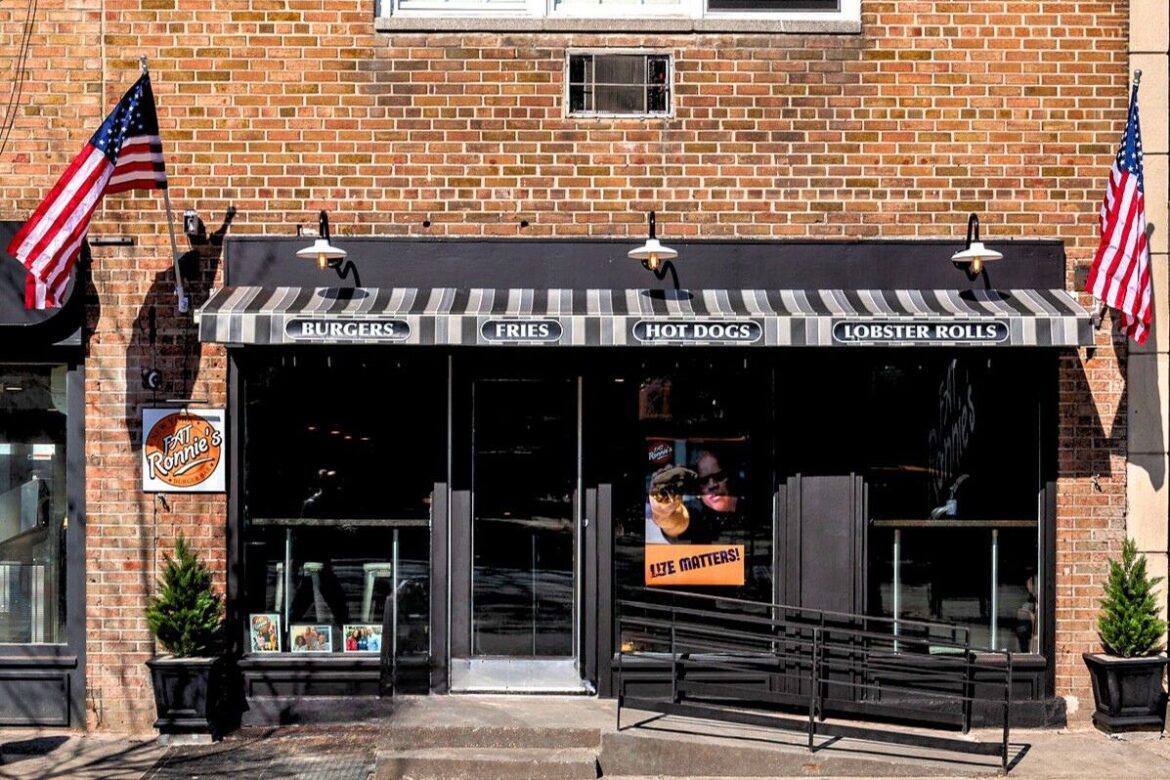
For Reynaldo “Ronnie” Faust of Fat Ronnie’s fame, Juneteenth isn’t just another date on the holiday calendar. Born in the Bronx, he watched his grandmother Maxine Faust, widely recognized as the country’s first Black female union butcher, build a business and a reputation for quality and hard work that shaped generations of his family.
“Juneteenth is an opportunity to not just highlight the business but also the history behind Fat Ronnie’s and to honor my ancestors,” Faust says.
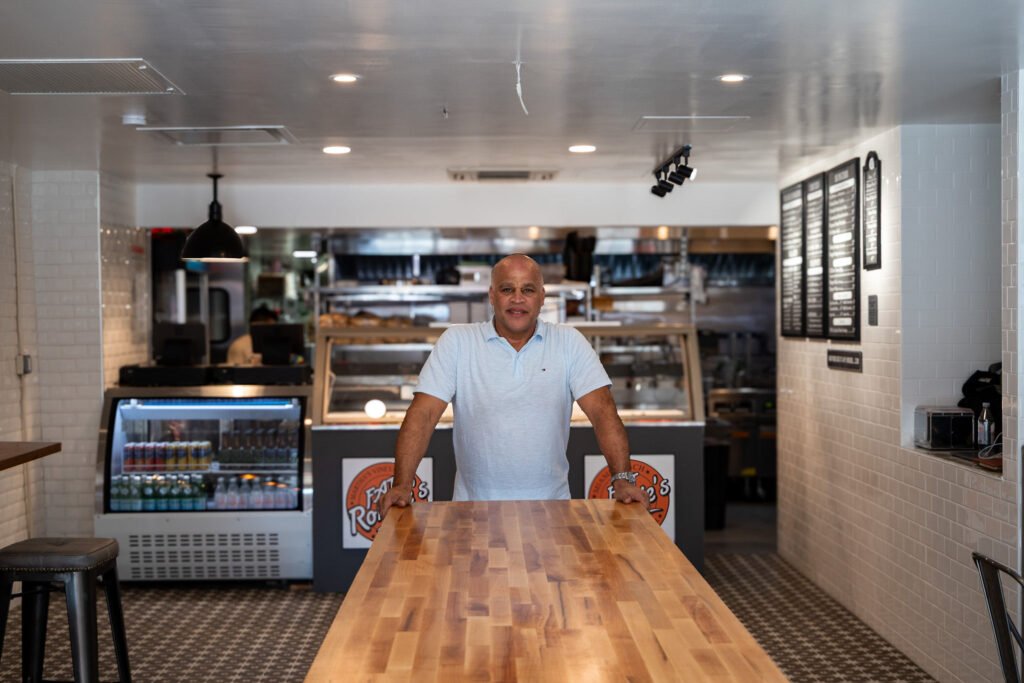
This year, as Fat Ronnie’s Burger Bar celebrates Juneteenth and its first months in the West Village, Faust is honoring that legacy with a new take on a longtime customer favorite: a lean turkey burger special topped with pepper jack cheese, barbecue sauce, and coleslaw ($14.95), which will be available through Sunday, June 21. “Ironically, Black folks love a turkey burger,” Faust says. “If I had to say a statistic, I’d bet 80% of my turkey burgers are bought by Black folks, so that’s how I’m celebrating Juneteenth.”
Coming Home
Though raised in the city, Faust spent many of his summers on Martha’s Vineyard, and in 2013, he opened the original butcher-forward Fat Ronnie’s Burger Bar in Oak Bluffs, the island’s historic Black enclave. Known for its half-pound never-frozen Black Angus burgers, the restaurant quickly became a local favorite, tourist draw, and celebrity haunt frequented by names like Barack and Michelle Obama, Kamala Harris, and Spike Lee. A second location followed in Miami Beach in 2020, but New York City has always been the goal. And in mid-March, Faust finally made it home, with the opening of a West Village Fat Ronnie’s location at the corner 6th Avenue and Carmine Street.
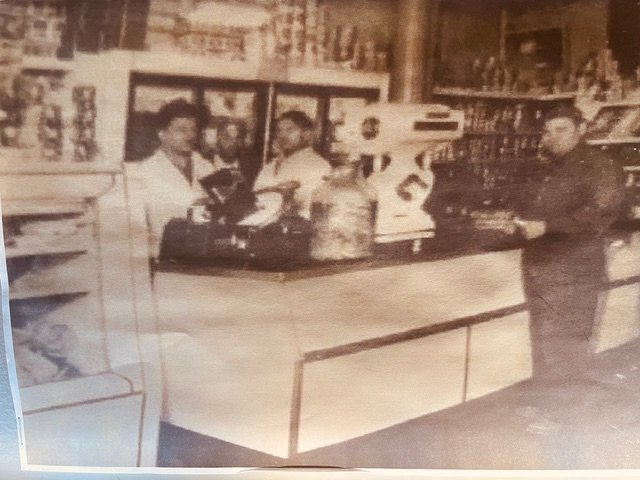
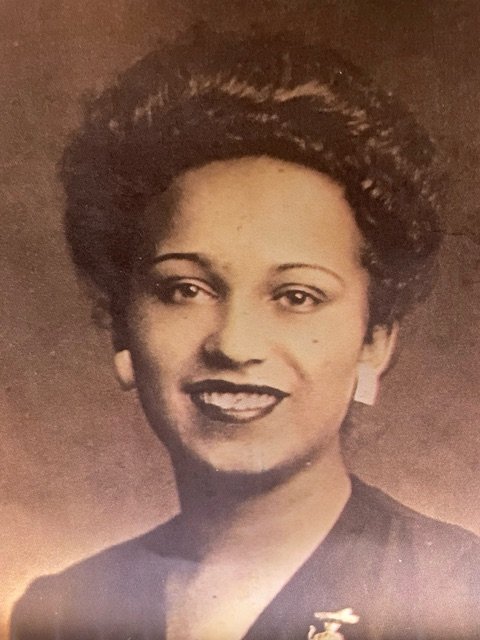
Faust grew up working at his grandmother’s restaurant, Maxine’s, beginning at age 6. His family once owned seven restaurants and bars within a five-block stretch of Harlem, and he long dreamed of bringing Fat Ronnie’s back to New York. “My grandmother, at barely five feet tall, was the matriarch of the family and ruled with an iron fist,” he says. “She taught me hard work, the restaurant industry, and how to make a great burger. It was always on my bucket list to open a place in the city.”
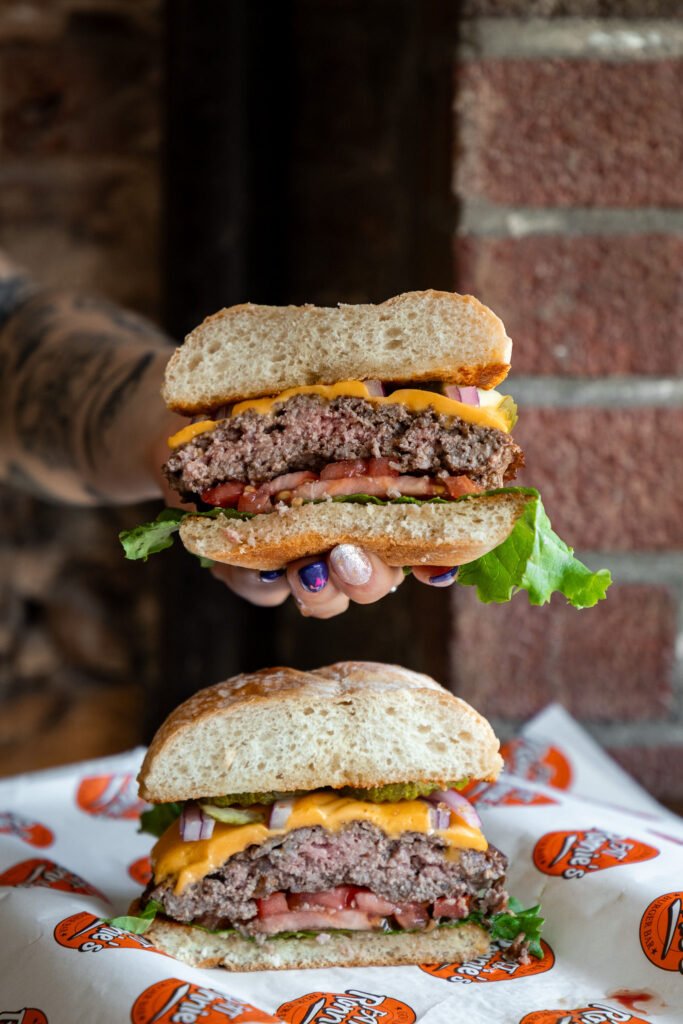
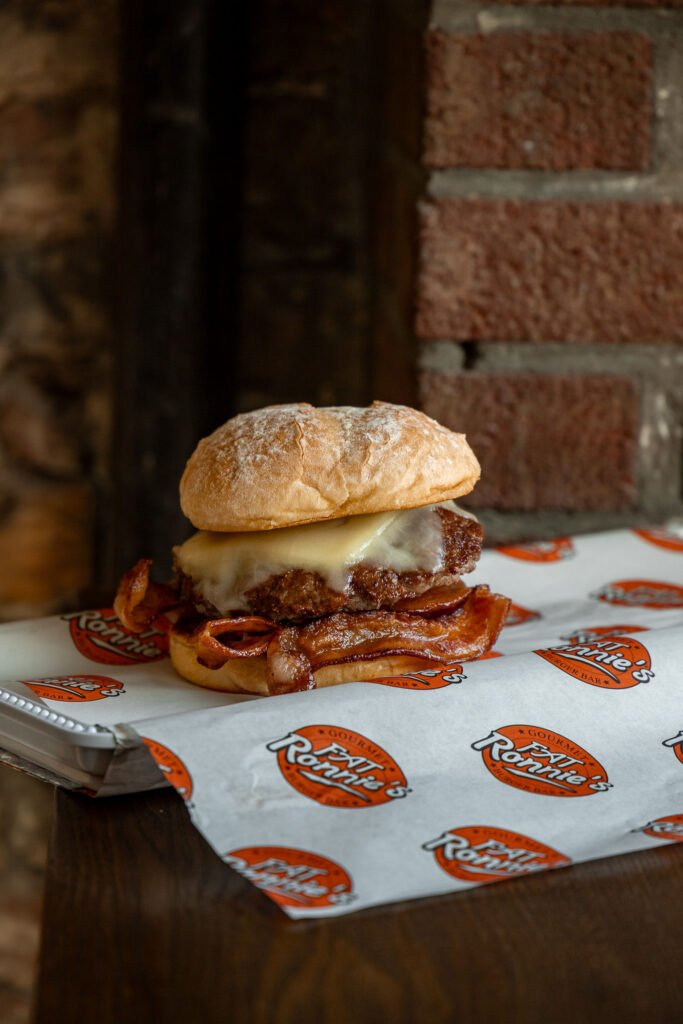
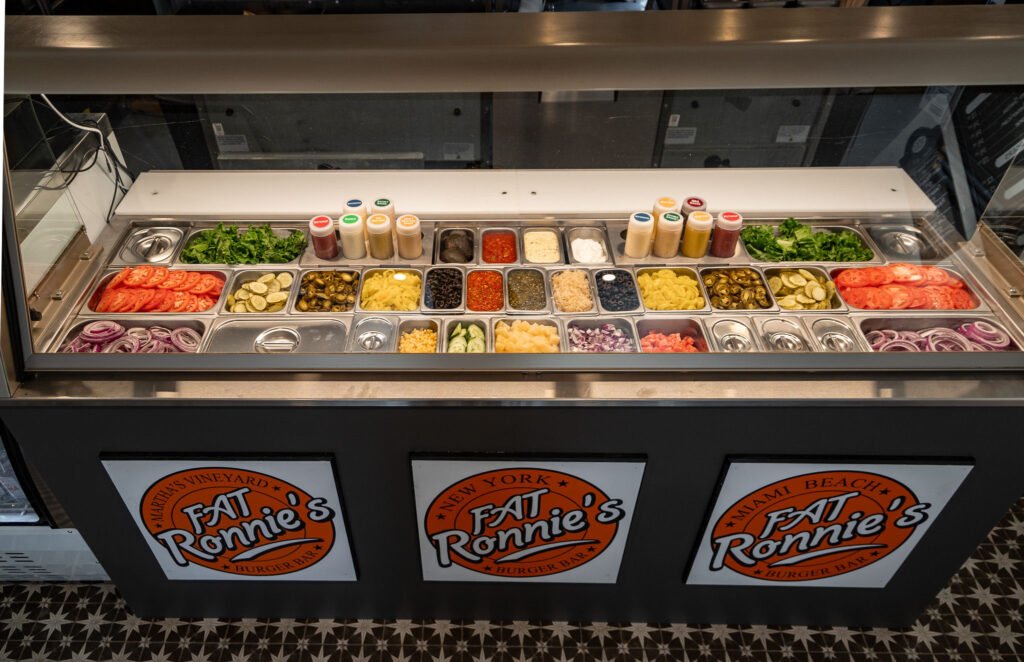
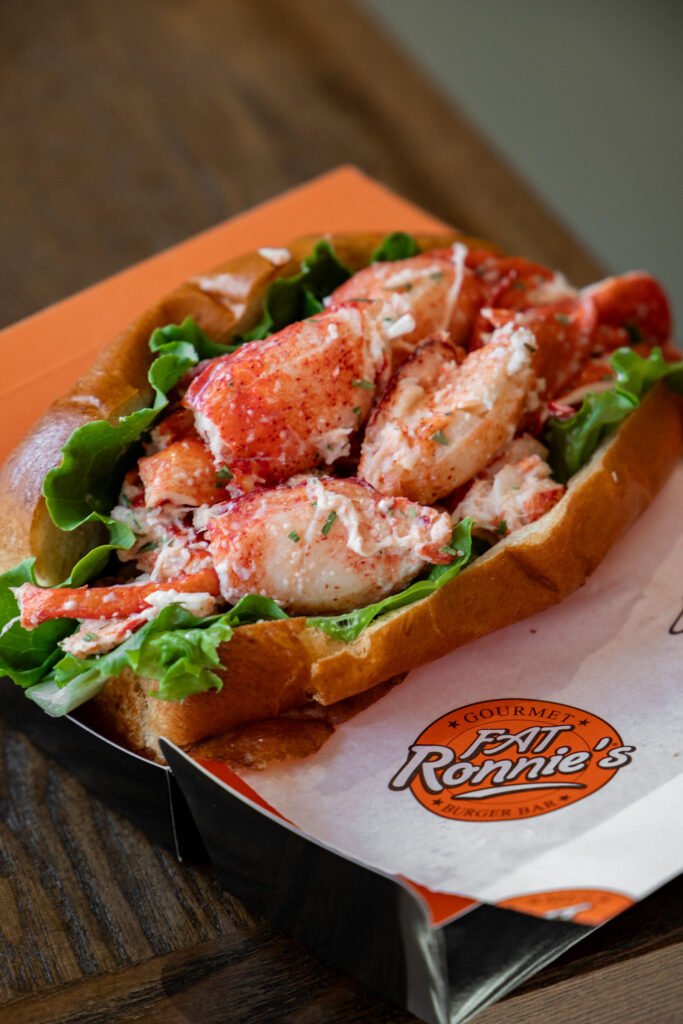
Alongside its traditional pub-style burgers, with meat ground fresh in-house ($13.95), Fat Ronnie’s offers build-your-own options with 32 toppings—including pineapple and housemade guacamole—plus fish sandwiches ($15.95), lobster rolls ($34.95), and fried chicken ($14.95), based on signature recipes handed down from Maxine. There’s even a hidden “Fat Ronnie’s Favorites” menu, accessible via QR codes, where offbeat combinations—like a hot dog topped with barbecue sauce, cheese, and potato salad—serve as a testing ground for future offerings.
Building a Neighborhood Spot
The journey to open in New York City proved longer than expected. A deal for a Harlem location fell through, and several other spaces went to larger brands and social media-driven concepts. After years of searching, Faust finally found the right fit downtown. “The West Village reminds me of the Vineyard,” he says. “It’s a neighborhood.”
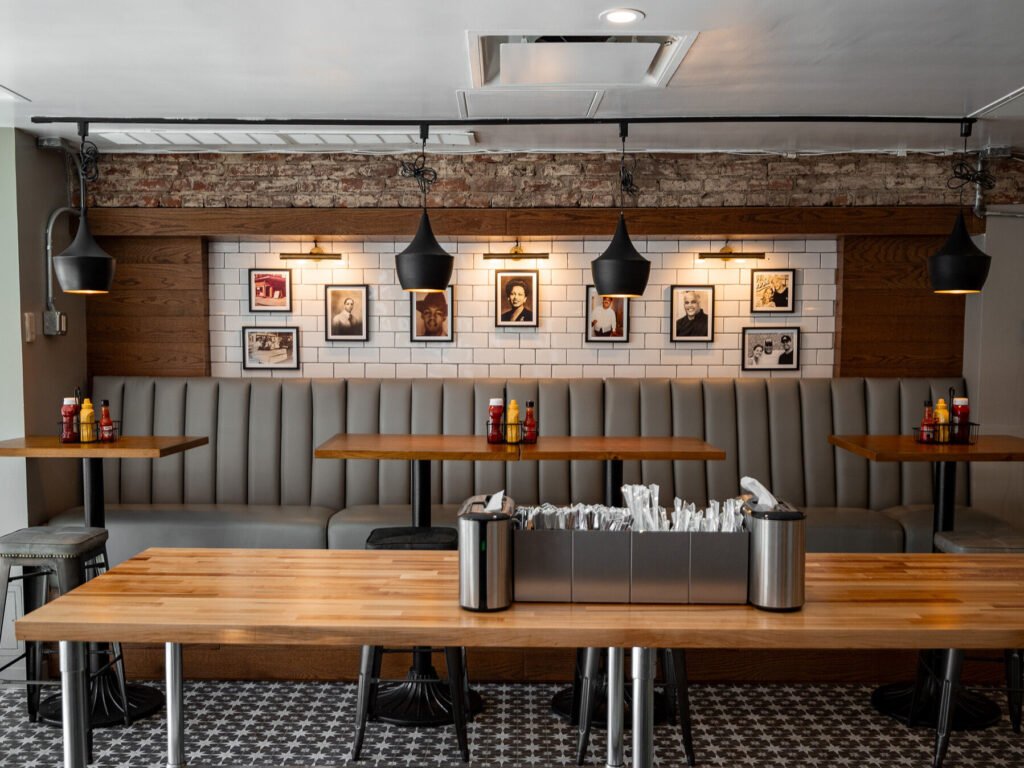
What he expected to take three months stretched to nearly a year, with permitting alone taking nine months. Then, ironically, came the challenge of introducing Fat Ronnie’s to New Yorkers. “Nobody knew who Fat Ronnie was,” he says. While crowds routinely form before opening outside his Vineyard location, building that same momentum in Manhattan has taken patience.
That pursuit of recognition comes at a challenging moment for restaurants. Rising food costs have driven up the price of tomatoes, lettuce, and beef, forcing many operators to balance quality with affordability. But for Faust, compromising on ingredients isn’t an option. “We’re a premium burger company that sells its product at a fair price,” he says. “I refuse to diminish the quality.”
Still, business has steadily grown, and on National Burger Day on May 28, customers waited outside in a block-and-a-half-long line. Recognition followed with Condé Nast Traveler naming Fat Ronnie’s one of the best burgers in New York City later that same day, praising the restaurant’s thick Angus patties, toasted country rolls, and seemingly endless topping possibilities.
Looking ahead, Faust hopes to collaborate with brands and creators on special menu items and events while becoming more deeply rooted in the West Village through school fundraisers and neighborhood gatherings—a way, he says, of giving back to the community that has welcomed him. It’s all part of his larger ambition.
“We were voted the best burger on Martha’s Vineyard, and I’m grateful for that,” he says. “But being the best burger in New York City—that’s how you know you’ve really made it.”
