

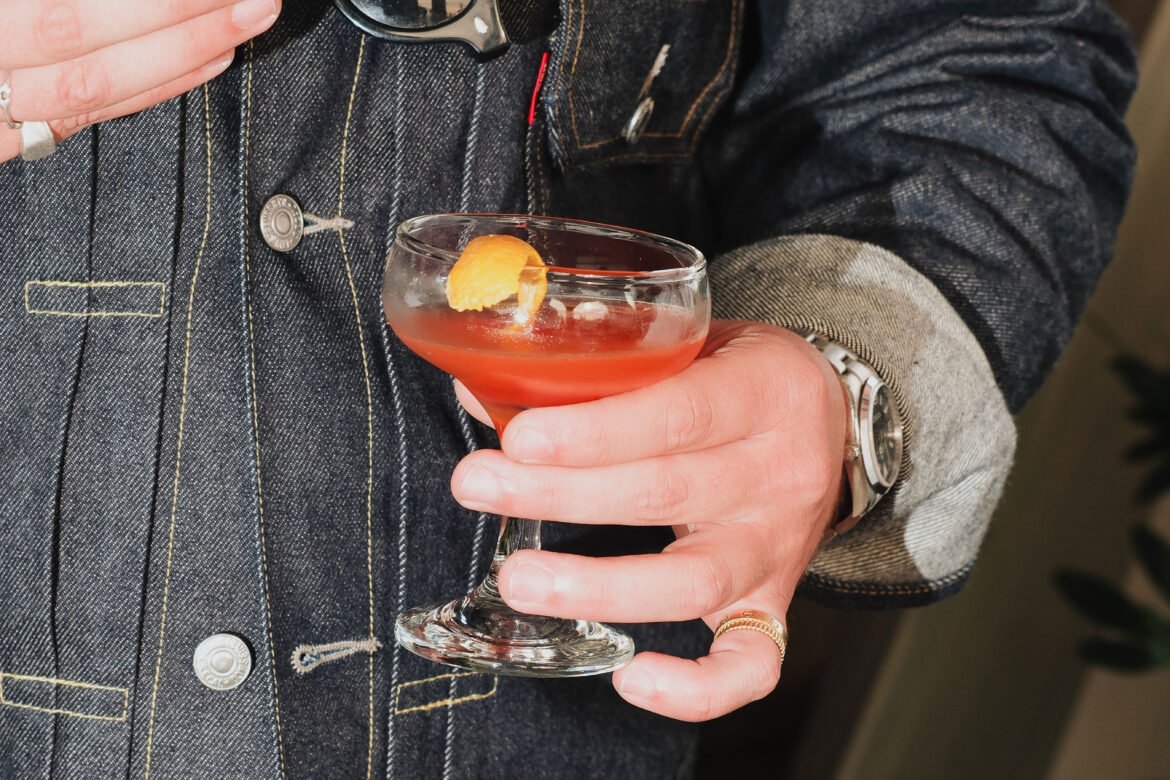
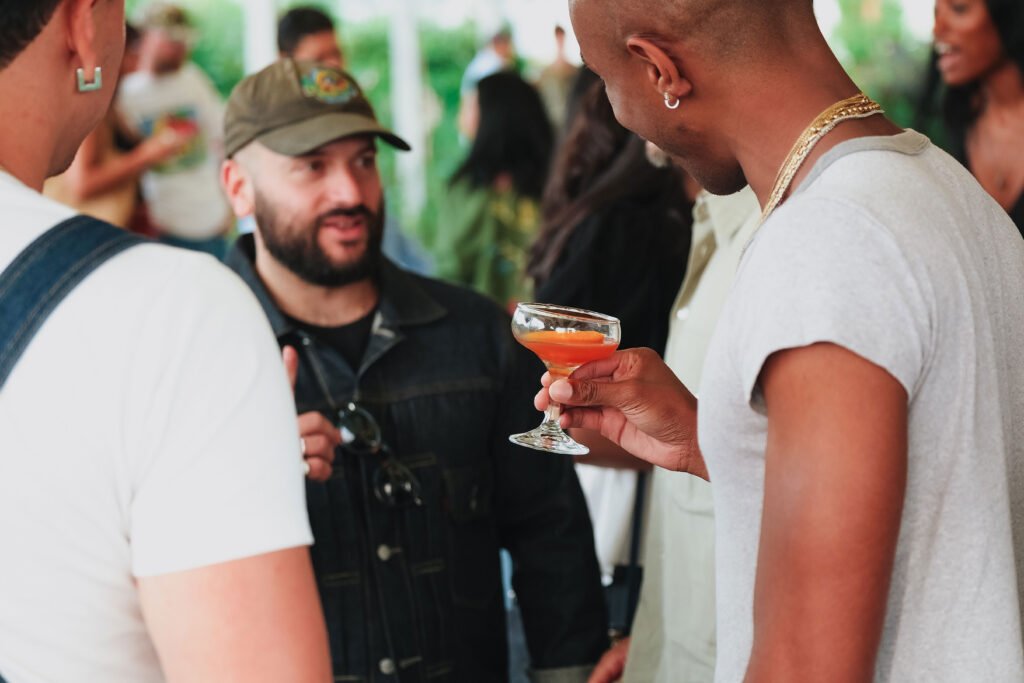
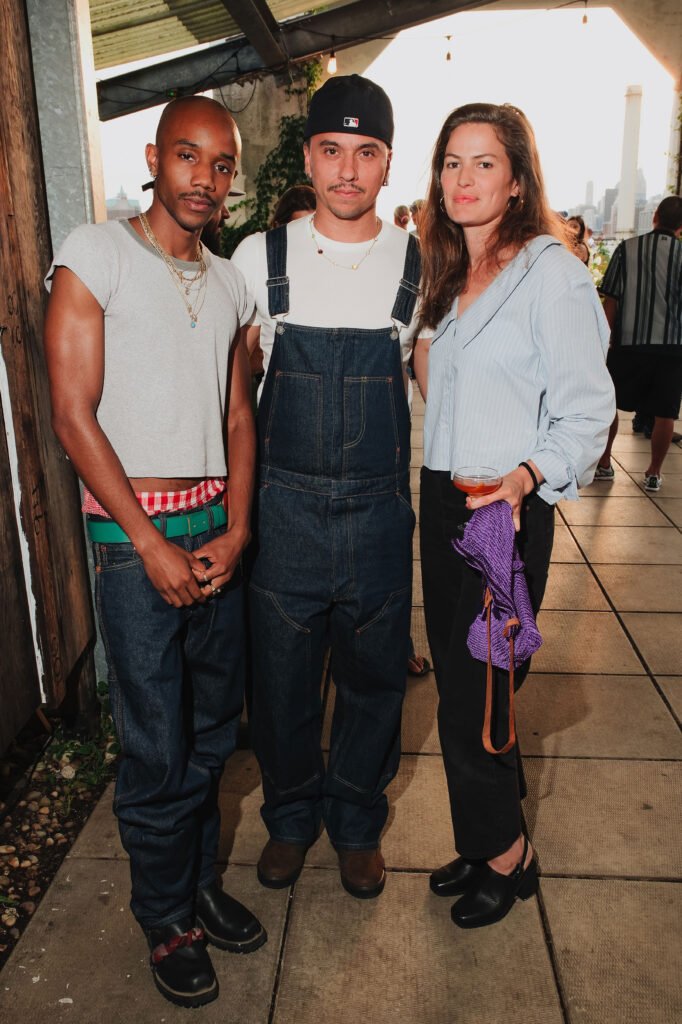
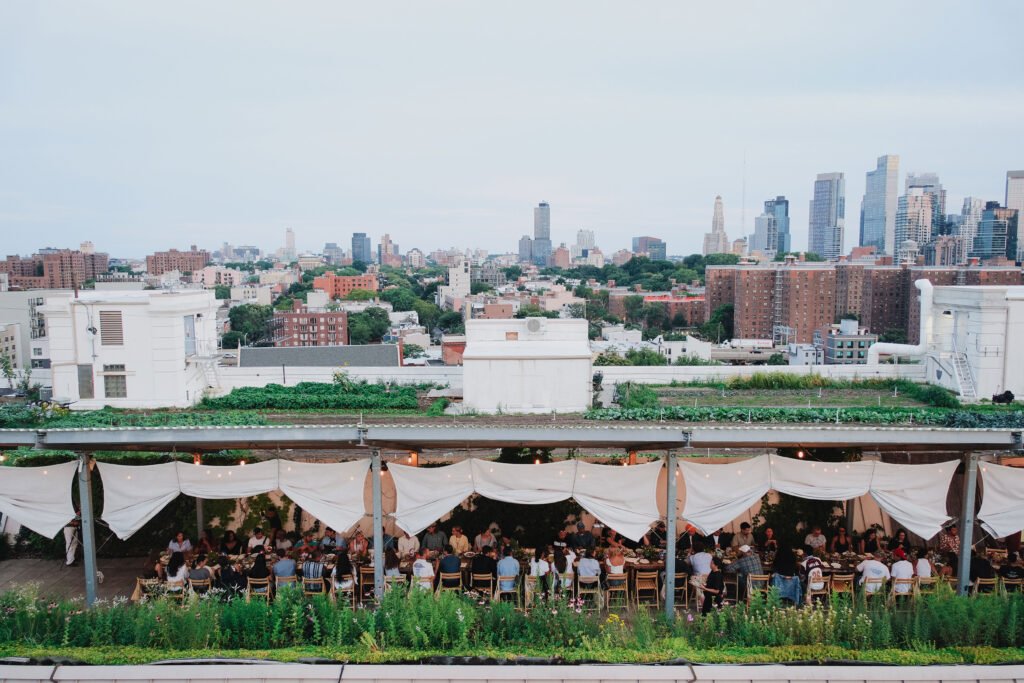
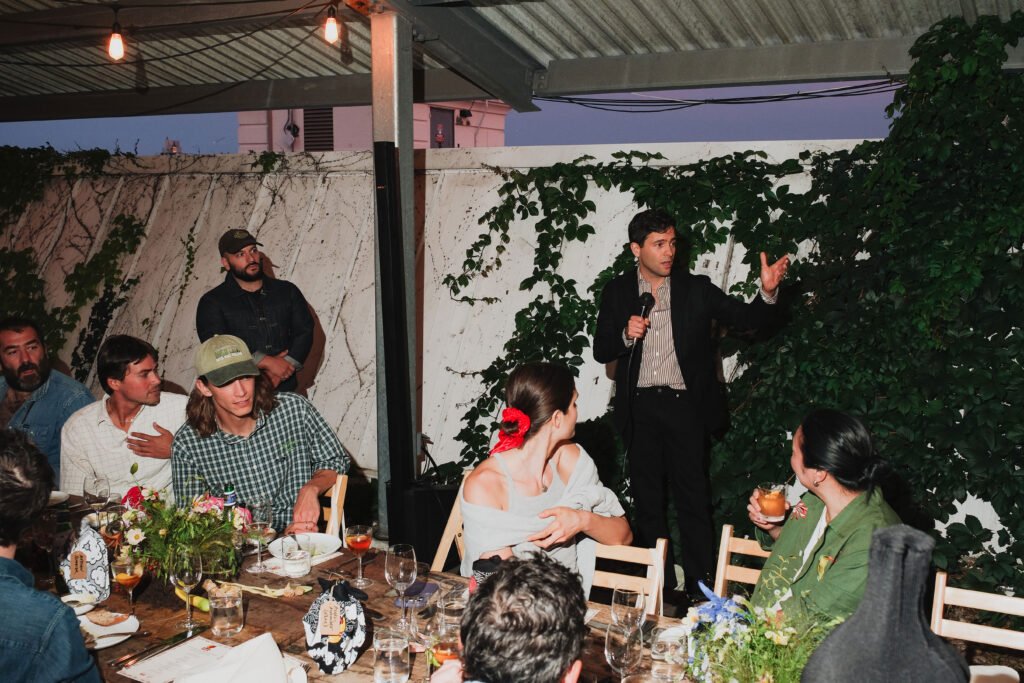
On a Friday evening in late July, friends, farmers and friends of farmers gathered atop Brooklyn Grange’s rooftop farm in the Brooklyn Navy Yard for the launch of the new Levi’s x Sky High Farm Goods workwear capsule collection. Above the East River, nasturtiums and thyme pushed through the soil of raised beds as the cocktail hour soundtrack moved from berlioz’s “nyc in 1940” and classic Sade tunes to a live set by singer-songwriter Raphaelle. Maker’s Mark, the launch’s exclusive spirits partner and a fellow advocate for regenerative agriculture, poured cocktails throughout the evening—beginning with their classic whisky sour and ending with a tiny Maker’s 46 espresso martini.
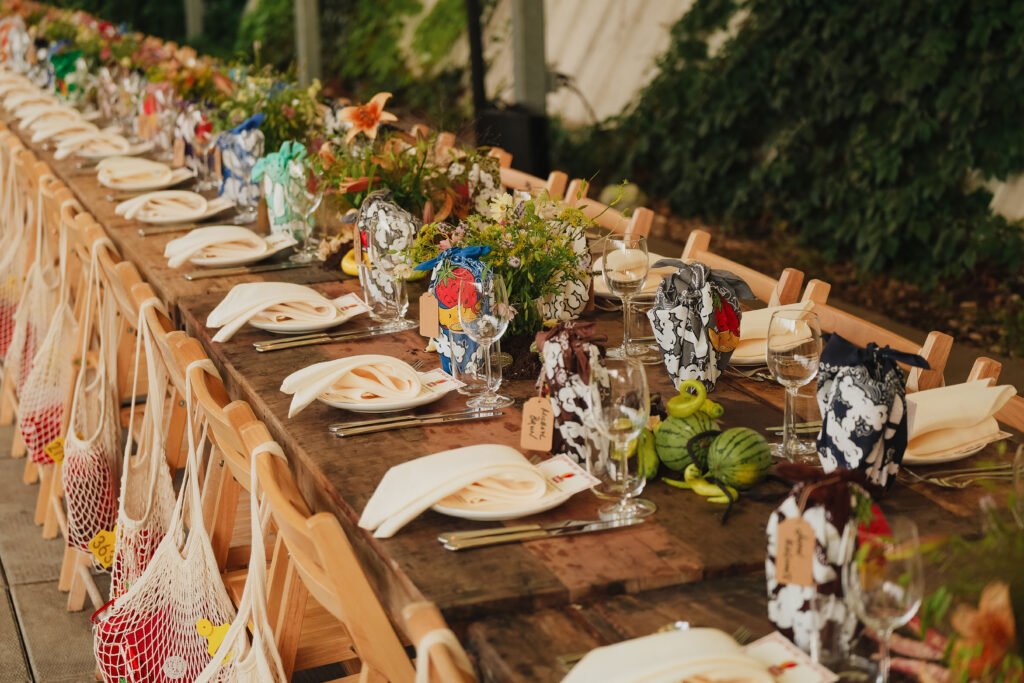
Later, a family-style seasonal dinner by chef DeVonn Charles Francis featured melon and shrimp carpaccio, watermelon and tomato gazpacho, barbecue celeriac skewers, and insalata di mare (seafood salad) tossed with potatoes, and finished with the sweet simplicity of strawberries and cream. Fashion editors and photographers mingled with chefs and food-access advocates, alongside the teams behind Levi’s, Sky High Farm Goods, and Maker’s Mark.
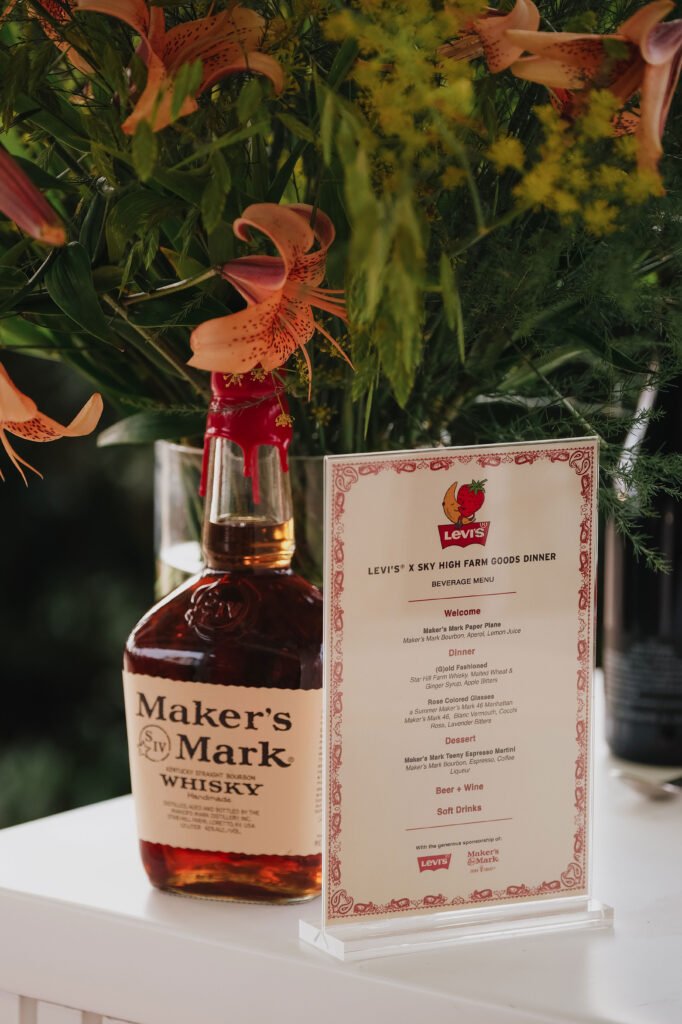
The label Sky High Farm Goods was cofounded by Daphne Seybold, a Comme des Garçons and Dover Street Market alum, and Gagosian-represented artist Dan Colen as the for-profit offshoot of the nonprofit Sky High Farm. Through high-visibility brand collaborations across food and fashion, the label helps raise funds for the farm’s food equity work. In Levi’s and Maker’s Mark, they found ideal and iconic partners.
The capsule kickoff was a celebration three years in the making—and a coming together of brands whose products may look very different, but are united by something fundamental: agriculture. From the cotton in Levi’s workwear to the grains in Maker’s Mark bourbon, both begin with the healthy soil.
Workwear, Reworked
Every piece in the collection, which launched July 25, is made with organic and “transitional cotton”—a term for fiber grown by farmers moving away from synthetic pesticides and fertilizers to practices that rebuild soil health and support biodiversity. During a three-year transition period, farmers cannot yet sell their cotton as certified organic, even as they invest in changing how they farm.
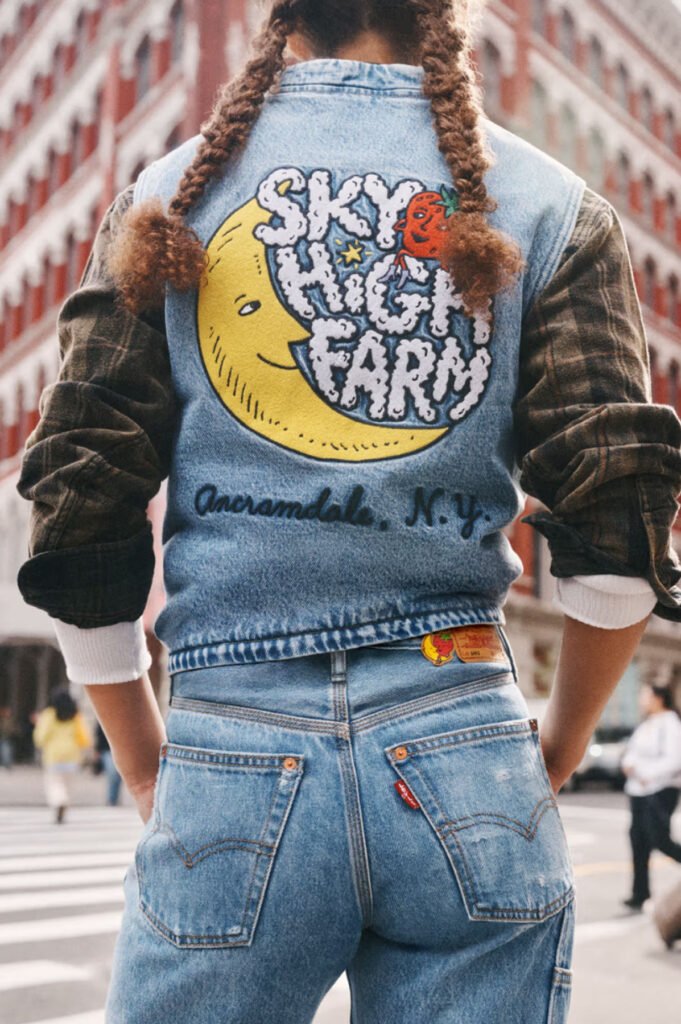
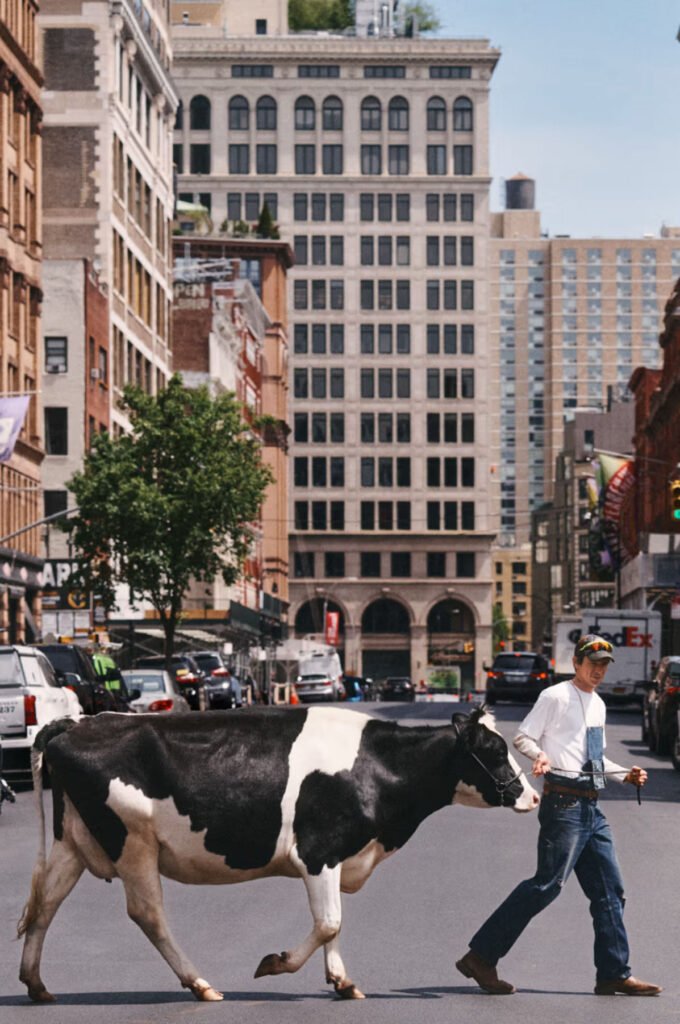
That gap is where Levi’s saw an opportunity to use its scale to create demand and investment in transitioning cotton farms. The collaboration stemmed from an ongoing relationship between the two brands. “At Levi’s, we look for partners who bring something new while sharing our commitment to craftsmanship, authenticity, and lasting value,” says Leo Gamboa, Levi’s vice president of collaborations. “Sky High challenged us to rethink workwear from the perspective of people who wear it every day.”
The resulting collection is whimsical yet designed to be worn in the wild. Levi’s classic workwear silhouettes—chore coats, overalls, jeans, work vests, and a trucker jacket—are reinterpreted through Sky High’s farm-tough, utilitarian POV. The pieces feature triple-needle construction, custom hardware, embroidery, and co-branded details, including Sky High’s iconic strawberry-and-moon logo and “Cloud S”—an update to Levi’s Red Tab. The 10-piece collection ranges from $65 graphic and pocket tees to $225 overalls, with loose and straight jeans priced at $145, chore coats and trucker jackets at $195, and a garden tote for $95.
For Seybold, co-CEO and CMO of Sky High Farm Goods, the brands’ shared intention is what distinguished the collection from a traditional fashion collab. “This collaboration goes beyond more responsibly-made, great-looking products,” she says. It supports farmers during the conversion to organic practices while connecting clothing to the larger story of farming, climate, and food equity. She says Levi’s heritage as a maker of clothing for workers offered a natural foundation for a collection centered on farmers and agricultural systems.
A Shared Foundation
Just as Levi’s is looking to the soil behind its cotton, Maker’s Mark has always looked closely at caring for the agriculture that creates its whisky. The distillery sees regenerative farming as a way to improve both the health of the land and the quality of what comes from it.
“Maker’s Mark has long believed that exceptional flavor begins with exceptional agriculture,” says Pierre-Alexandre Lebard, Maker’s Mark director of prestige and innovation. At Star Hill Farm, home to the Kentucky distillery, the company has championed regenerative farming and says healthier soil leads to healthier ecosystems and better ingredients and flavor.
Maker’s Mark is both B Corp- and Regenified-certified. Its Star Hill Farm Whisky, the distillery’s first handmade wheat whisky, was named World’s Best last year and became the first to earn Estate Whiskey certification. That work inspired the Maker’s Mark Regenerative Alliance, the company’s commitment to advancing regenerative farming practices beyond its own business. “Agriculture is culture,” Lebard says. “We’re proud to support a collaboration that reflects our values, reaches new audiences, and inspires broader change.”
For Seybold, the connection became even clearer when the Sky High team visited Star Hill Farm this spring. She says what stood out was the care for the land, the people, and the surrounding community. “Whether you’re growing food or distilling whisky, the quality of what you create is inseparable from how you care for the land,” she says.
Bringing the Farm to the City
The July dinner was only one part of the launch. The following day, Levi’s and Sky High hosted a farmers’ market on New York City’s Bond Street, bringing growers, prepared-food makers, and local nonprofits into the city alongside the new collection.
Together, the dinner and farmers’ market offered another way for Sky High’s work to reach a broader audience, while giving Maker’s Mark an opportunity to support the farmers, makers, and agricultural systems at the heart of the collaboration. Sky High Farm Goods has raised $1.5 million in donations for the nonprofit farm since its inception and commits 5% of its annual revenue to its work.
Ultimately, the collaboration asks consumers to look beyond finished products to the farms, workers, and agricultural practices behind them. A pair of jeans begins not in a store, but in a field. Whisky has an agricultural story, too. For Levi’s, Sky High Farm Goods, and Maker’s Mark, those connections make regenerative agriculture something worth bringing to the dinner table, the farmers’ market, and your wardrobe. “The best partnerships create something neither brand could make alone,” Gamboa says. “We want people to wear these pieces for years, make them their own, and feel connected to their story.”
At the heart of it all is a shared commitment to the land and everything it makes possible.


